
Have you ever wondered why some brands instantly capture global attention while others struggle to be seen? The secret often lies in executing unconventional ad campaigns that break the traditional rules of marketing. Today's saturated digital landscape means that playing it safe rarely delivers the breakthrough results that executives and decision-makers demand for their organizations.
When you explore various advertising campaign examples, it becomes clear that taking calculated creative risks is essential for rapid growth. By embracing unconventional advertising, marketing leaders can cut through the noise, spark genuine conversations, and drive a massive return on investment. Let's look at how pushing boundaries can transform a standard promotion into a cultural moment.

What Are Unconventional Ad Campaigns and Why Do They Work?
Unconventional advertising campaigns step away from standard billboards, generic television commercials, and predictable social media posts. Instead, they leverage surprise, humor, and highly interactive experiences to capture the consumer's attention when they least expect it.
These creative ad campaigns work because they bypass the natural defense mechanisms modern consumers have built against traditional sales pitches. When you present an audience with disruptive advertising that feels like entertainment or a real-world event, they are far more likely to share it organically. This word-of-mouth amplification drastically reduces customer acquisition costs while boosting overall brand awareness.
4 Core Types of Unconventional Advertising to Disrupt the Market
To build a highly effective advertising strategy, you must first understand the different vehicles available for non-traditional promotion. Alternative advertising does not rely on a single format. It adapts to the specific environment where your target audience spends their time.
Guerrilla Marketing, Ambient Advertising, and Experiential Events
Guerrilla advertising relies on low-cost, high-impact tactics executed in public spaces to generate maximum buzz. Similarly, ambient advertising places ads in unusual locations, integrating the brand message seamlessly into the consumer's daily environment. Experiential advertising takes this a step further by inviting the public to interact directly with a physical installation, turning passive observers into active participants.
Utilizing Chaos and Absurdist Social Media for Brand Awareness
Absurdist marketing leans into the chaotic, unpredictable nature of internet culture and meme formats. Rather than focusing on high-production value, these innovative advertising efforts use strange, humorous, or purposely unpolished content to resonate with younger demographics. This approach humanizes the brand, making it feel less corporate and more culturally relevant.
5 Unconventional Ad Campaigns That Delivered Massive ROI
Looking at real-world creative advertising examples provides actionable inspiration for your next big product launch. These successful ad campaigns prove that stepping outside of the corporate comfort zone can yield extraordinary financial and cultural dividends.
Good News and It’s Fall “Campaign”
The coffee brand Good News posted an "OFFICIAL STATEMENT" admitting they failed to create a campaign for their new fall limited edition on time. In its Instagram post, the brand explained they preferred to admit their delay rather than release something just because the calendar dictated it.
Instead of a traditional reveal, they invited their community to try the new fall drinks on the house, asking customers to share photos and tell their friends what the brand got right or wrong. This transparent, anti-campaign approach bypassed traditional seasonal marketing clichés and turned a missed deadline into a massive community engagement opportunity.
Red Bull Stratos: High-Impact Stunts
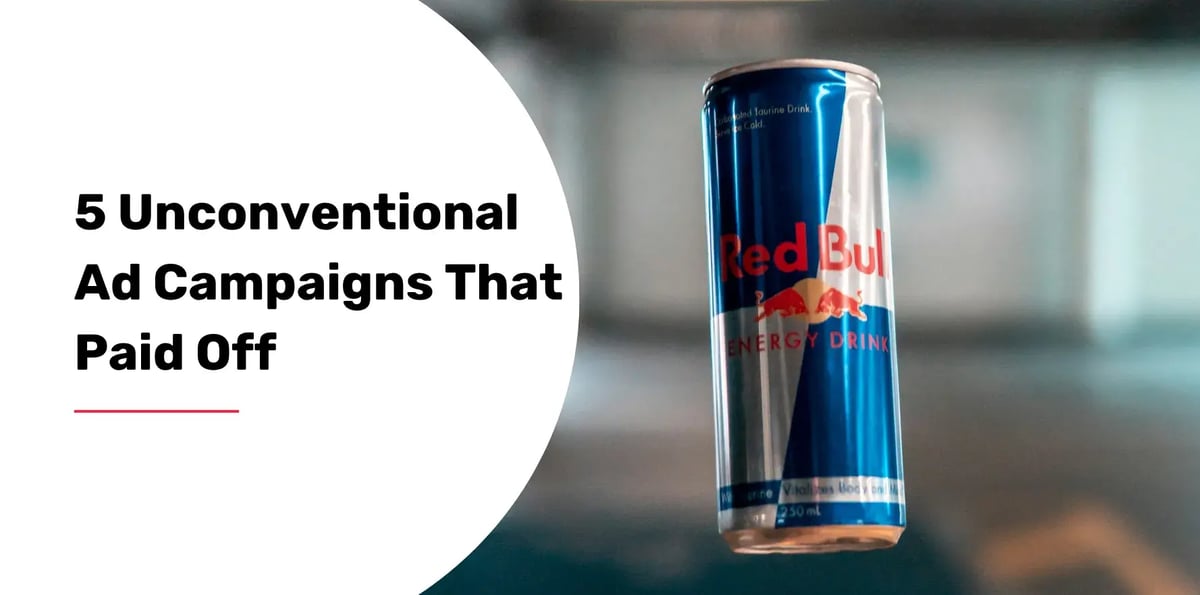
Red Bull redefined innovative marketing campaigns when they sent Felix Baumgartner to the edge of space for a record-breaking freefall. This was not just a stunt. It was a masterclass in unique advertising campaigns that positioned Red Bull as a lifestyle brand synonymous with extreme human achievement. The live broadcast garnered millions of concurrent viewers, proving that high-stakes events can dominate global media cycles.
Duolingo and Ryanair: Social Media for Gen Z
Duolingo and Ryanair have completely transformed their industries by using an unhinged, highly reactive TikTok presence. Instead of posting polished corporate updates, they use their mascots and airplanes to participate in trending memes and playfully mock their own customers. This style of memorable ad campaigns has turned both companies into social media titans, driving immense brand loyalty and app downloads.
Oatly: CEO as a Paid Actor
Oatly took a bold step by featuring their CEO, Toni Petersson, singing awkwardly in an oat field in a Super Bowl ad spot. By explicitly acknowledging the absurdity of a CEO singing an utterly simple song, Oatly created a brilliant piece of memorable marketing. This raw, self-aware approach made the brand feel authentic and approachable, standing out sharply against the polished commercials of its competitors.
UNICEF Dirty Water: Experiential Advertising for a Cause
To raise awareness about the global water crisis, UNICEF installed vending machines in New York City that sold bottles of dirty, disease-ridden water for one dollar. This powerful piece of experiential advertising forced privileged consumers to confront a harsh global reality in their everyday environment. The shock value of the installation generated widespread media coverage and successfully drove thousands of donations.
How to Build a Unique Advertising Strategy for Your Brand
Developing creative marketing campaigns requires more than just trying to be weird. It demands a deep understanding of your audience's psychology. Start by identifying the core pain points and daily habits of your target market, then brainstorm advertising ideas that interrupt those habits in a delightful or thought-provoking way.
Balancing Innovative Marketing Campaigns With Brand Risk
Innovation always carries a degree of risk, especially when executing disruptive advertising campaigns. To mitigate potential backlash, leadership teams must ensure that every unconventional tactic remains anchored to the company's core values. A stunt that feels completely disconnected from your product will confuse buyers, whereas a bold campaign that amplifies your actual brand mission will build lasting trust.
Measuring the Advertising Success of Non-Traditional Channels
Tracking the ROI of a guerrilla stunt or an absurdist social post requires looking beyond standard click-through rates. You must monitor spikes in direct brand search volume, social listening sentiment, and earned media mentions to gauge true advertising success. Effective advertising in the non-traditional space often creates a halo effect, where overall baseline sales increase long after the initial viral moment has faded.
Conclusion
Embracing unconventional ad campaigns is no longer just a tactic for niche startups. It is a vital strategy for any organization looking to scale. By analyzing these successful examples and understanding the mechanics behind disruptive advertising, you can empower your team to take calculated creative risks. When you prioritize bold ideas over safe execution, you position your brand to not only capture attention but to dominate the market.

Giulia Lallas
Content & Marketing Strategist at Cyberclick. A Boston University graduate in advertising with a master's degree in digital marketing from ESIC University and international management from Luiss Business School.



Leave your comment and join the conversation