
Every marketing budget comes with the pressure to deliver measurable results. As you plan your next move, you will likely face the classic debate of whether to take the sponsorship vs. advertising route and wonder which avenue will bring the highest return. Both paths require a significant financial commitment, but they operate on fundamentally different principles and timelines.
Allocating resources effectively means understanding exactly how these strategies impact your bottom line. While one approach guarantees direct visibility and immediate metrics, the other builds deep-rooted trust and long-term loyalty. This article breaks down the nuances of each method to help you make data-driven decisions for your next campaign.

Sponsorship vs. Advertising: Understanding the Core Differences
Let's get into what differentiates the two approaches. The main distinction lies in how the audience perceives your message and the timeline for seeing a tangible return on your investment. You have to know your primary objective before you dedicate a part of your budget to either path.
Sponsorship: Building Equity Through Association
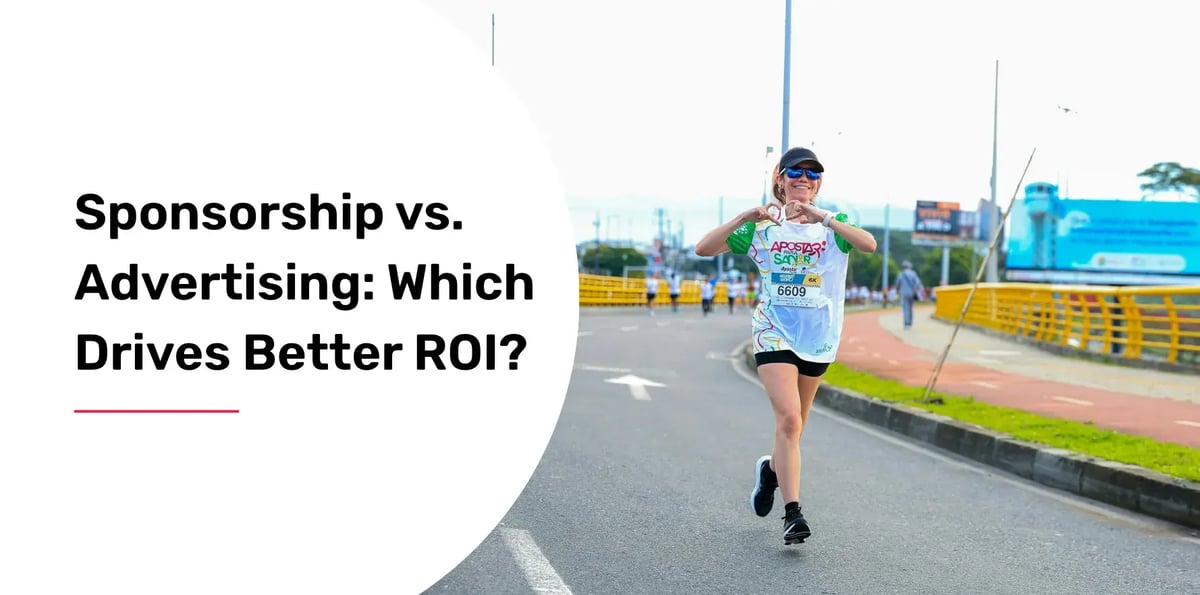
Sponsorship involves supporting an event, organization, or person financially in exchange for brand visibility. It aligns your business with the values and audience of the sponsored entity. This method relies heavily on creating a positive association rather than pitching a direct sale.
When you invest in brand sponsorship, you integrate your company into an experience the audience already cares about. This builds a level of emotional equity and trust that direct selling simply cannot replicate.
Advertising: Direct Promotion for Immediate Results
Advertising is the practice of paying for space or time to promote a specific product or service directly. Whether you use digital advertising or traditional print media, you control the exact message and its placement.
This approach is highly transactional. You present a clear offer and ask the consumer to take a specific action. The focus is always on driving immediate, trackable outcomes that move the needle today.
Push vs. Pull: How Each Model Influences the Buyer Journey
These two models interact with the buyer journey in very different ways. Advertising acts as a push strategy. You interrupt the consumer's experience to place your message in front of them, hoping to catch their attention in a crowded market.
On the other hand, sponsorship marketing acts as a pull strategy. You embed your brand naturally within a social feed, event, or community. The audience comes to you because they already have a connection to the entity you sponsor.
Measuring Marketing ROI: Performance vs. Brand Awareness
Determining the exact marketing ROI for these initiatives requires different measurement frameworks. Start by defining what success looks like and setting clear performance baselines before you allocate a single dollar.
Calculating ROI for Digital Advertising Campaigns
Tracking the performance of advertising campaigns is typically straightforward and highly analytical. You can trace a direct line from ad spend to clicks, conversions, and closed sales.
You know exactly how much you paid to acquire a specific customer. This precise data allows you to adjust media buying tactics in real time in order to maximize your margins and avoid wasted spend.
Analyzing the Return on Investment for Brand Sponsorship
Measuring the return on investment for a sponsorship is much more complex and requires a longer outlook. The primary goal is often brand awareness rather than immediate lead generation or direct sales.
You might track metrics like media impressions, sentiment analysis, or social media mentions. While these numbers show reach, they do not always translate immediately into trackable revenue on a spreadsheet.
Differences in Cost
Evaluating cost effectiveness requires looking beyond the initial price tag. An ad campaign might require a lower upfront investment and provide immediate cash flow to fund future initiatives.
A sponsorship in a public setting often demands a larger initial commitment with a longer wait for financial payoff. You are paying a premium for the borrowed trust of the established event or organization.

Sponsorship example
When to Choose One Over the Other
Selecting the right path depends entirely on your current marketing strategy and overarching business goals. A well-rounded approach often requires balancing short-term revenue generation with long-term brand building.
Prioritize Advertising for Quick Sales and Lead Gen
If your primary objective is to boost quarter-end revenue or launch a specific product quickly, ads are your best tool. You can target exact demographics and optimize your creatives for immediate conversions.
This is the ideal route when you need predictable marketing performance and fast data collection. You control the narrative, the targeting parameters, and the exact call to action.
Invest in Sponsorship to Establish Trust and Credibility
When you need to break into a new market or change public perception, sponsorships are highly effective. They lend immediate credibility to your company by association.
By showing up where your target audience naturally gathers, you build authentic relationships. This is crucial for B2B companies that rely on long sales cycles and need to establish themselves as industry authorities.
Hybrid Models: Integrating Ads Into Sponsored Events for Maximum Impact
You do not always have to choose between sponsorship and advertising. The most successful brands often combine both into a single promotional strategy. Consider adding targeted digital ads around the same time you sponsor a major industry conference.
This dual approach reinforces your message and captures the audience across multiple marketing channels.
Here is how you can blend both methods effectively:
- Run retargeting ads targeting the geographic area or attendee list of the sponsored event.
- Create specific landing pages for event attendees to track engagement and capture leads directly.
- Use the sponsored organization's logo in your digital ads to build instant trust with prospects.
Combining these tactics amplifies your reach and makes attribution slightly easier. You get the halo effect of the sponsorship alongside the trackability of direct ads.
Modern Marketing Performance: Analytics and Attribution
Data is the backbone of any successful marketing operation. In order to understand exactly how your investments are performing across all touchpoints, you need to implement robust tracking systems.
The Challenge of Attribution in Sponsorship Marketing
Attribution models often struggle to quantify the exact financial impact of a sponsorship. If a prospect sees your logo at an event and then searches for your company a month later, the event rarely gets the credit in standard reporting tools.
This can lead leadership teams to undervalue brand-building efforts. You have to look at combined metrics and overall pipeline growth to see the true impact of these relationships.
Using Data to Optimize Your Promotional Strategy Across Channels
You need strong marketing analytics to bridge the gap between broad brand visibility and direct response. Analyzing multi-touch attribution helps you see the entire customer journey from start to finish.
By connecting your CRM data with your ad platforms, you can identify hidden patterns. You might find that leads who attended your sponsored event close faster when exposed to performance marketing ads later in the cycle.
Final Thoughts
Deciding between sponsorship and advertising is not about finding a universal winner. It is about deploying the right tool for your specific business objectives at the right time. Focus on building a strategy that leverages the trust of sponsorships and the precision of digital ads to encourage sustainable growth.

Laia Cardona
Responsible for content and brand visibility strategy at Cyberclick, with an Allbound approach and specialization in SEO, GEO (Generative Engine Optimization), and AI-powered automation. Advanced HubSpot CRM management: database segmentation, workflows, lead nurturing, scoring, and reporting. Background in digital marketing, corporate communications, and journalism—combining strategy, creativity, and technology to attract and convert qualified leads.



Leave your comment and join the conversation