
As artificial intelligence takes on a larger role in marketing operations, companies face a critical challenge: balancing rapid automation with strict accuracy. A HITL, or human-in-the-loop, system offers a structured way to integrate human expertise directly into machine learning processes. Instead of letting algorithms run completely unchecked, this model guarantees that real people review, guide, and correct the outputs before they reach the public or impact your bottom line.
Understanding this concept is essential for maintaining brand integrity, especially if complex AI workflows are involved. A solid human-in-the-loop AI strategy prevents costly errors, keeps messaging aligned with your values, and builds confidence among your team and your customers. By adopting this collaborative approach, you can safely scale your content and data operations while keeping a firm grip on quality.

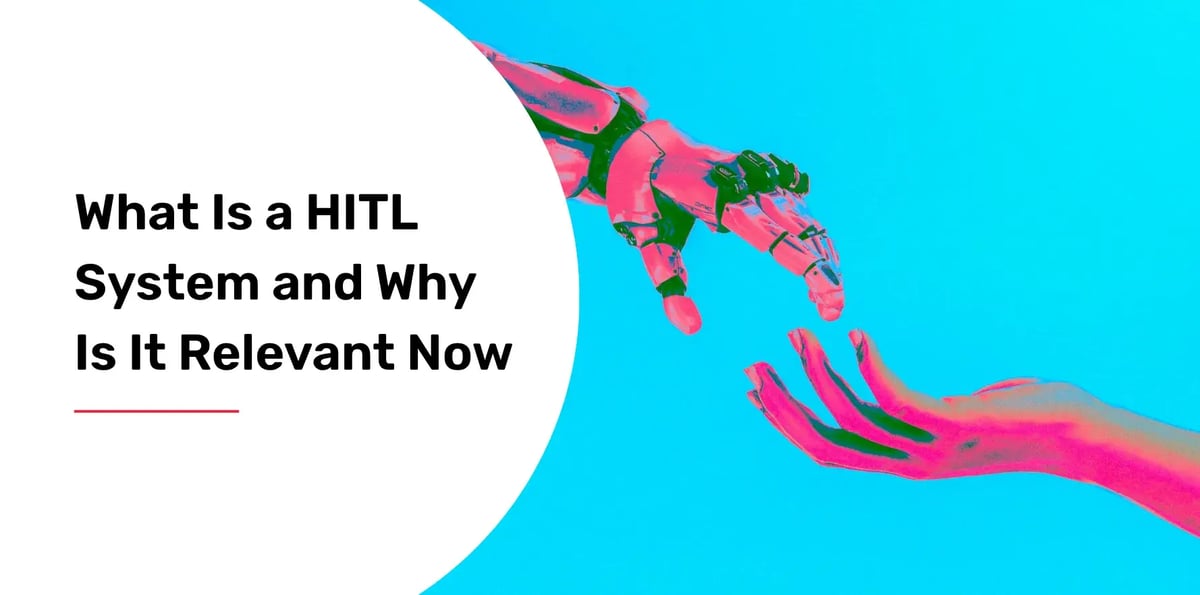
What Is a HITL System? Understanding Human-in-the-Loop AI
A HITL system is an AI deployment model that requires step-by-step human oversight, distinguishing it from fully autonomous workflows where machines operate independently. In other words, it means that a person is actively involved in training the algorithm, testing its outputs, and making the final decision on complex tasks. This prevents AI systems from making poor judgments based on flawed or incomplete data.
Treating the algorithm as a highly capable assistant rather than an independent decision-maker is the most effective way to protect your brand. By designing your processes this way, you combine the processing speed of a machine with the contextual judgment of a human.
Human-In-the-Loop vs. Human-On-the-Loop (HOTL)
While both models involve human interaction, the level of control differs significantly. In a HITL model, the process pauses and waits for manual intervention before proceeding to the next step. It is a highly controlled environment suitable for sensitive tasks where mistakes can lead to significant financial or reputational costs.
In contrast, a human-on-the-loop (HOTL) system allows the machine to operate autonomously while a person monitors the overall performance. The human can intervene if something goes wrong, but the software does not require explicit permission to execute routine actions. Choosing between the two depends entirely on your specific AI risk management requirements and the volume of tasks your team needs to process.
How Human AI Collaboration Transforms Machine Learning
Many assume that machine learning models get smarter entirely on their own by simply processing more information. In reality, an algorithm left act independently often amplifies existing biases, hallucinates incorrect data, or diverges from your brand guidelines.
True human AI collaboration changes this dynamic by treating the algorithm as a highly efficient trainee rather than an autonomous expert. By having professionals constantly evaluate the output, companies create a closed-loop system where the machine actively learns from human corrections rather than repeating the same mistakes. This means the model becomes highly specialized to your specific business logic, moving far beyond the capabilities of a generic, out-of-the-box tool.

Why Is HITL Relevant Now? AI Governance and Safety
The rapid adoption of generative tools has exposed companies to unprecedented legal and reputational vulnerabilities. When an automated chat system gives incorrect pricing or a programmatic campaign generates inappropriate imagery, the brand faces public backlash, not the software provider.
Implementing strict AI governance is no longer just an IT requirement but rather a critical component of corporate strategy. Establishing a framework for responsible AI is the only practical way to protect consumer trust while scaling digital production.
Mitigating Risks: Reducing Bias and Improving Fairness
Algorithmic bias occurs when a model relies on skewed historical data to make predictions or generate content. In a digital marketing context, this can easily lead to discriminatory ad targeting, skewed audience segmentation, or tone-deaf messaging that alienates key demographics.
Adding a human reviewer into the process acts as a key firewall against these biases. The reviewer spots the cultural and contextual nuances that a machine cannot comprehend, ensuring fairness and ethical considerations in your campaign strategy.
Building Transparency and Trust Through AI Oversight
Consumers and regulatory bodies are increasingly wary of how companies use artificial intelligence. If a customer feels manipulated by an opaque algorithm, their trust in the brand evaporates quickly, leading to higher churn rates and negative public relations.
Practicing active AI oversight allows companies to document exactly how and why a machine made a specific decision. This provides the documentation needed to prove their operations are ethical, transparent, and fully compliant with emerging digital regulations.
Implementing a HITL Approach in Your AI Workflows
Integrating a human-in-the-loop system requires more than just assigning someone to read generated texts. It demands a structured approach to building human checkpoints directly into your daily AI workflows. Establishing clear validation steps ensures that production speed does not compromise the integrity of your deliverables.
Managing Training Data and AI Quality Control
The foundation of any reliable model is the data it learns from. Human reviewers play a critical role in the initial stages by labeling data, filtering out irrelevant information, and establishing strict AI quality control protocols. When you curate the input and set the initial parameters, the algorithm generates far more accurate and brand-aligned outputs from the start.
AI Monitoring and Continuous AI Feedback Loops
Deployment is only the beginning of the refinement phase. Effective implementation requires active AI monitoring to catch sudden drops in performance or unexpected shifts in tone. By establishing a continuous AI feedback loop, your team constantly corrects minor errors, allowing the model to adapt dynamically to new marketing trends and audience preferences.

Balancing Efficiency and Accuracy in AI Decision Making
The biggest hesitation that many people face when adopting these tools is the fear of losing control over the final output. That being said, requiring human approval to every single micro-task completely negates the speed advantages of automation. Maximizing ROI in AI decision making requires identifying which tasks need strict review and which can run safely on autopilot.
When to Incoporate Human Oversight
Routine tasks like analyzing large datasets, sorting lead scores, or sending generic email follow-ups are perfect candidates for fully autonomous processes. On the other hand, applying human oversight to AI is a non-negotiable when it comes to high-stakes actions, such as finalizing public relations statements, setting dynamic pricing, or launching important ad creatives. Organizing your tasks this way protects your brand while increasing your operational speed.
Strengthening AI Risk Management for Marketing Campaigns
In the constantly evolving world of AI and digital marketing, a single algorithmic mistake can waste thousands of dollars in ad spend within minutes. Integrating human checks into your campaign setup provides a necessary layer of AI risk management. It allows your team to catch flawed targeting parameters, budget anomalies, or inappropriate ad placements before they go live, actively safeguarding your marketing investment.
The Future of AI Systems: Keeping Humans at the Center
As AI systems continue to update, the industry conversation is shifting away from completely replacing human workers. The most successful AI systems in the future will be those that are designed to support human creativity and strategic thinking, rather than eliminate it. Companies that prioritize a collaborative, human-centric approach will build a stronger, safer, and more authentic base in the age of automation.

Héctor Borrás
Key Account Manager Engineer at Cyberclick. Expert in web application development and system integrations with over 10 years of experience. He holds a degree in Mathematics, a Higher Degree in Computer Application Development, and a Higher Degree in Multiplatform Application Development.

Leave your comment and join the conversation