
ChatGPT Ads are sponsored promotional placements within OpenAI's conversational interface that allow brands to reach users directly inside generative chat threads. As consumer search habits shift from traditional blue links to interactive chat, advertising on ChatGPT provides a direct line to decision-makers actively seeking answers. Integrating this channel into your digital marketing strategy helps your organization stay visible where high-intent conversations are already happening.
Digital marketers and sales leaders face rising acquisition costs and diminishing returns on traditional display channels. When prospective buyers use generative AI to research software, evaluate vendors, or outline operational plans, traditional search ads miss the moment of decision. Exploring whether the ChatGPT advertising platform fits your growth goals allows you to capture qualified attention before your competitors adapt.

An Introduction to ChatGPT Ads
The rollout of the ChatGPT ad platform marks a major shift in how companies approach AI advertising. OpenAI introduced sponsored placements to monetize free and lower-tier user experiences while giving businesses access to deeply engaged audiences. Unlike static banner placements across web pages, a ChatGPT ad campaign delivers sponsored suggestions based on the real-time context of a user's prompt.
This setup creates a unique opportunity for brand discovery within natural conversations. When users ask for product recommendations or operational advice, sponsored responses can offer relevant solutions at the exact moment of intent. Testing early adoption of generative AI advertising allows your brand to establish a presence before ad inventory becomes saturated.
From Search Engine Marketing to Conversational Advertising
Traditional search engine marketing relies on static keywords and explicit query matches. Users type short phrases into search bars, and ad platforms display sponsored links at the top of the results page. Conversational advertising changes this dynamic by analyzing multi-turn dialogues and natural language nuances to deliver contextual recommendations.
Moving from traditional paid search to conversational channels requires adjusting your messaging strategy. Instead of relying on short call-to-action copy, your campaigns must address complex user queries with helpful, informative responses. Transitioning your paid media approach to conversational platforms positions your business to capture high-intent users who prefer interactive research over clicking traditional web links.
Navigating the ChatGPT Advertising Platform and Ad Targeting
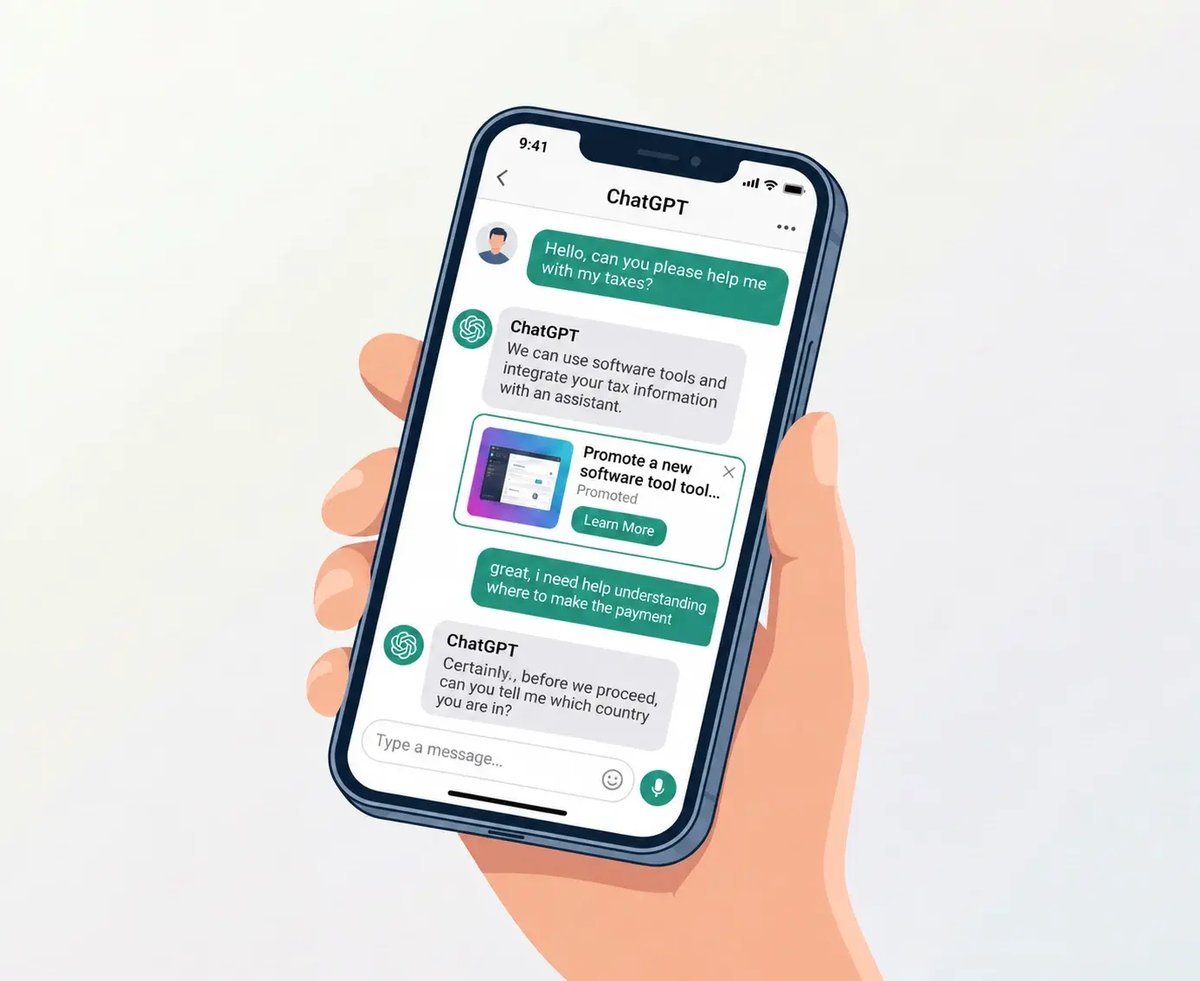
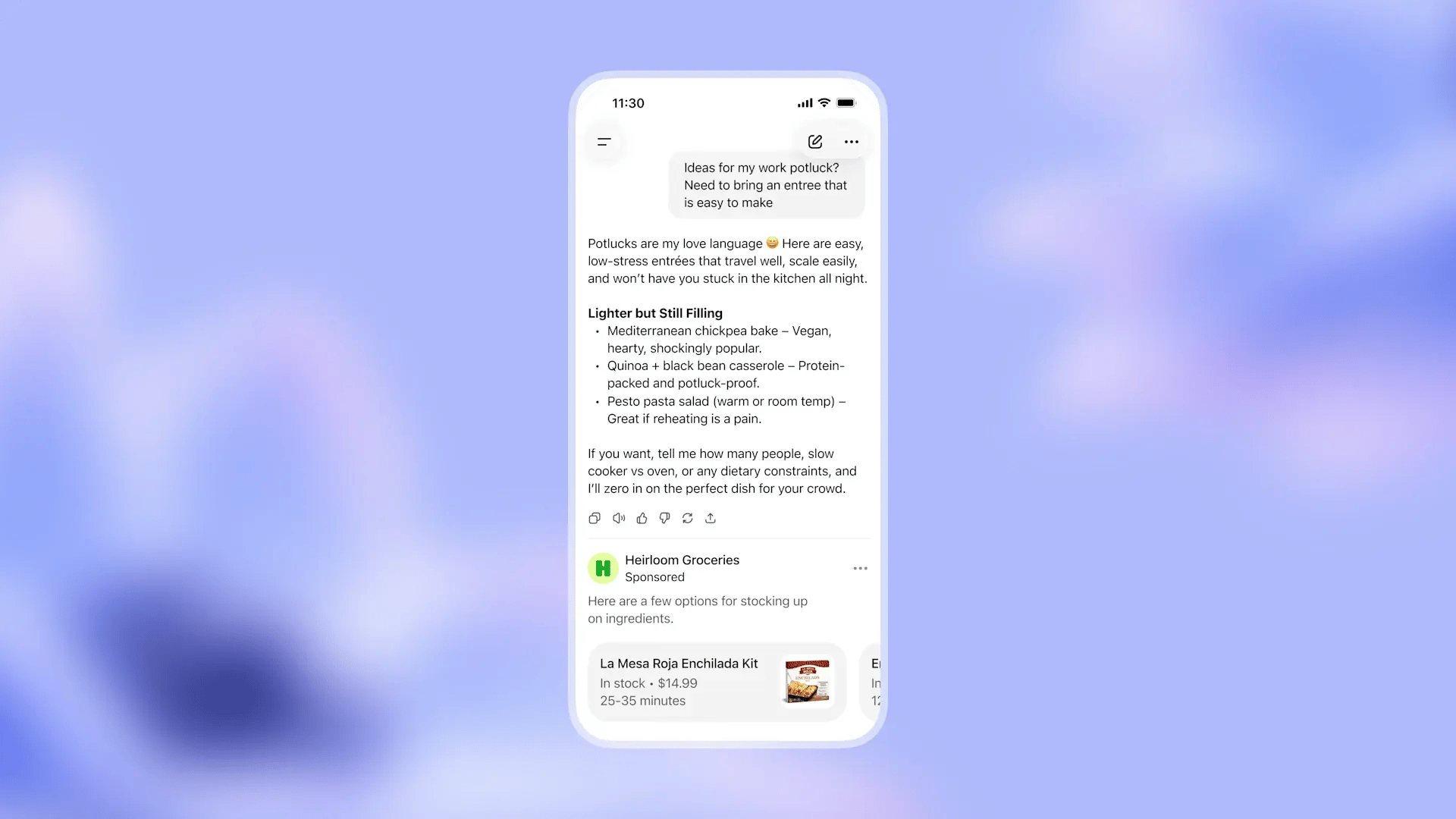
The ChatGPT advertising platform operates differently than traditional social media or search channels. Instead of targeting users by their demographic profile or specific keyword searches, the system evaluates the ongoing conversation to determine relevance. This means your ads appear as a labeled, sponsored card below the AI-generated response, rather than interrupting the text itself.
Understanding ChatGPT ad targeting requires a shift in how you build audiences. Because the platform relies on contextual matching, your success depends on clearly defining the problem your product solves. When you provide detailed context hints to the system, you increase the likelihood that your ad appears during highly relevant user queries.
How OpenAI Matches Context Hints With User Intent
OpenAI evaluates three main layers of context when deciding which ad to display. First, it looks at the active conversation to see what the user is currently asking. Second, it reviews past chat history to understand broader interests. Finally, it uses memory features to recall saved preferences.
To capitalize on this, you must structure your campaign inputs clearly:
- Describe your product features using natural language questions that your buyers actually ask.
- Define the specific business problems your solution addresses, avoiding vague marketing claims.
- Provide context about your ideal customer so the system understands who benefits most from your offer.
Providing these detailed inputs helps the algorithm match your brand with the right conversation. When the system understands exactly what you sell, it delivers your message to users who are actively researching your category.
Brand Safety and Protecting the Generative AI User Experience
One major concern with AI marketing is brand safety. Advertisers often worry that their brand might be associated with inappropriate or inaccurate AI responses. OpenAI addresses this by strictly separating the sponsored content from the generated text, making sure that ads do not influence the actual answers the model provides.
While this separation protects your brand image, it also means your ad must stand alone as a valuable resource. You cannot rely on the AI to sell your product for you, so your ad copy must quickly establish trust and provide a clear next step.
Source: ads.openai.com
2026 ChatGPT Ad Costs
Budgeting for AI search advertising requires understanding the platform's pricing structure. When OpenAI first tested the waters, they required massive minimum commitments that only enterprise brands could afford. With the launch of the self-serve ChatGPT Ads Manager, those minimums disappeared, opening the door for businesses of all sizes to participate.
Evaluating ChatGPT ad costs means looking at both impression-based and click-based models. Since there is no longer a massive financial barrier to entry, you can start testing this channel with a modest budget and scale up as you see positive returns.
Understanding the CPC and CPM Benchmarks
The platform currently offers two main pricing models: cost per thousand impressions (CPM) and cost per click (CPC). During the initial enterprise pilot, CPMs hovered around $60, but as inventory expanded, those rates dropped to a range of $25 to $60 depending on the industry.
For most performance-driven marketing teams, CPC bidding is the preferred route. Starting bids typically range from $3 to $5 per click, which is highly competitive when compared to traditional B2B search terms that often exceed $20. While these benchmarks are favorable now, advertising on ChatGPT will likely become more expensive as more brands enter the auction.
Setting Up Campaigns in the ChatGPT Ads Manager
Launching a campaign in the ChatGPT Ads Manager feels similar to using established platforms like Google or Meta. You create an account, select your objective, build your creative assets, and set a daily budget. The interface is designed to be intuitive, allowing your team to deploy tests quickly without requiring extensive technical training.
The simplicity of the setup does not guarantee immediate success, though. You must approach your campaign structure strategically to avoid wasting budget on unqualified traffic.
Choosing Between Reach and Clicks Objectives
Your first major decision is selecting your campaign objective. If your goal is broad market awareness and you have the budget to support high frequency, selecting the Reach objective makes sense. You will pay for every thousand times your ad appears, regardless of whether the user interacts with it.
If your goal is to drive qualified traffic and measure direct ROI, you should select the Clicks objective. Paying only when a user clicks your ad reduces your financial risk while you test different creatives and learn how the channel performs. Most experts recommend starting with CPC bidding to gather concrete data before attempting broader brand awareness plays.

Structuring Ad Formats, Headlines, and Landing Pages
The visual format of a ChatGPT ad is relatively simple. It consists of a headline, a short description, an image, and a destination link. Because the format is compact, your copy must be direct and highly relevant to the conversation that triggered it.
Sending users to a generic homepage will hurt your conversion rates. Instead, you should direct traffic to a dedicated landing page that continues the conversation and directly answers the user's initial question. A smooth transition from the chat interface to your website builds trust and keeps the prospect engaged.
Measuring ChatGPT Ad Performance and Marketing ROI
Tracking results in a new channel is always challenging, and ChatGPT is no exception. The platform is still evolving, and some of the advanced measurement tools you expect from mature networks are still in development. While these tools are limited, you can still gather meaningful data to evaluate your ChatGPT ad performance.
You must remember that only users on the Free and Go tiers see ads. If your target audience consists entirely of executives paying for premium subscriptions, your ads will not reach them. Before you invest heavily, you must evaluate whether your ideal buyers actually use the ad-supported versions of the tool.
Tracking Conversions and UTM Parameters for Executive Reporting
To measure the true impact of your digital advertising, you cannot rely on platform metrics alone. Implementing strict UTM tracking on all your destination links allows you to monitor exactly what ChatGPT users do once they land on your site. You can track bounce rates, time on page, and specific actions within your own analytics dashboard.
OpenAI also provides a Conversions API and pixel tracking for advertisers. By installing the pixel on your site, you can pass conversion data back to the Ads Manager, allowing the system to optimize delivery toward users who are most likely to buy. This closed-loop reporting is essential for justifying your investment to leadership and proving that conversational advertising drives real business growth.
Conclusion
The introduction of the ChatGPT advertising platform represents a major shift in how brands connect with consumers online. While the channel is still maturing and lacks some advanced targeting features, the early-mover advantage is significant. By testing conversational advertising now, your organization can capture high-intent traffic at a lower cost before the market becomes saturated. Integrating this new tool into your broader strategy helps you stay ahead of changing search behaviors and keeps your brand visible where it matters most.


David Tomas
CEO and co-founder of Cyberclick. David Tomas has more than 25 years of experience in the online world. He is an engineer and completed an Entrepreneurship program at MIT, Massachusetts Institute of Technology. In 2012 he was named one of the 20 most influential entrepreneurs in Spain, under the age of 40, according to Global Entrepreneurship Week 2012 and IESE. Author of "The Happiest Company in the World" and "Diary of a Millennial".


Leave your comment and join the conversation